

When Sebastian Mallaby published The Power Law: Venture Capital and the Making of the New Future, he shifted the spotlight from mythologized founders to the architects behind Silicon Valley’s enduring success: entrepreneurs-turned-investors who recycled their wealth, experience, and networks into a compounding engine of innovation. Don Valentine, Peter Thiel, and Marc Andreessen didn’t just fund companies, they engineered ecosystems.
A similar transformation is now quietly gaining momentum across Africa, led by Harambeans. Much like the PayPal alumni who reshaped American tech, these African founders aren’t exiting the stage after success, they’re redesigning it.
Operator Capital: Founders Become Funders
Take Iyinoluwa Aboyeji H’10, co-founder of Andela and Flutterwave, two of Africa’s most iconic unicorns. Today, he’s General Partner at Future Africa, a venture platform backing mission-driven startups. Similarly, Melvyn Lubega H’16, co-founder of edtech unicorn Go1, has teamed up with Breega to launch a $75 million fund focused on early-stage African startups.
These founder-investors represent a broader shift: experienced African operators channeling their success into capital, mentorship, and infrastructure to nurture the very markets they once had to navigate without a roadmap.
Reinvesting in the Ecosystem
Mallaby’s power law thesis argues that a small number of startups drive most returns, and that the real multiplier effect comes when early winners reinvest. By that measure, Africa is now showing signs of a virtuous cycle.
By 2021, Harambeans were at the forefront of the continent’s innovation economy. They led three of Africa’s five unicorns and founded three of its six most active venture firms: Launch Africa Ventures, LoftyInc Capital, and Future Africa.
Launch Africa Ventures is emblematic of this shift. Co-founded by Janade Du Plessis H’18 and Zachariah George H’19, the firm has become one of Africa’s most prolific early-stage investors. In just two years, it backed over 100 startups across more than 20 countries, including often-overlooked markets like Madagascar, Sudan, and Togo. With a pan-African thesis and a hands-on approach, Launch Africa is providing not just capital but operational and strategic firepower.
This is not an anomaly, it’s deliberate architecture. These operator-investors are systematically laying the foundation for Africa’s next generation of builders.
Harambeans: Africa’s PayPal Mafia?
The so-called PayPal Mafia, early employees who went on to launch companies like YouTube, LinkedIn and Palantir, transformed Silicon Valley after a single IPO. Africa’s version is less centralized but no less consequential.
Harambeans are building in a more fragmented, undercapitalized environment. That makes their reinvestment efforts more than strategic, they’re essential. In many cases, they’re helping create the infrastructure they never had.
Redrawing Africa’s Capital Map
Beyond headline names like Aboyeji, Lubega, George and Du Plessis a broader vanguard of Harambeans is actively redrawing the venture capital map across Africa. These founders-turned-funders are not just allocating capital, they’re architecting the scaffolding of the continent’s innovation economy.
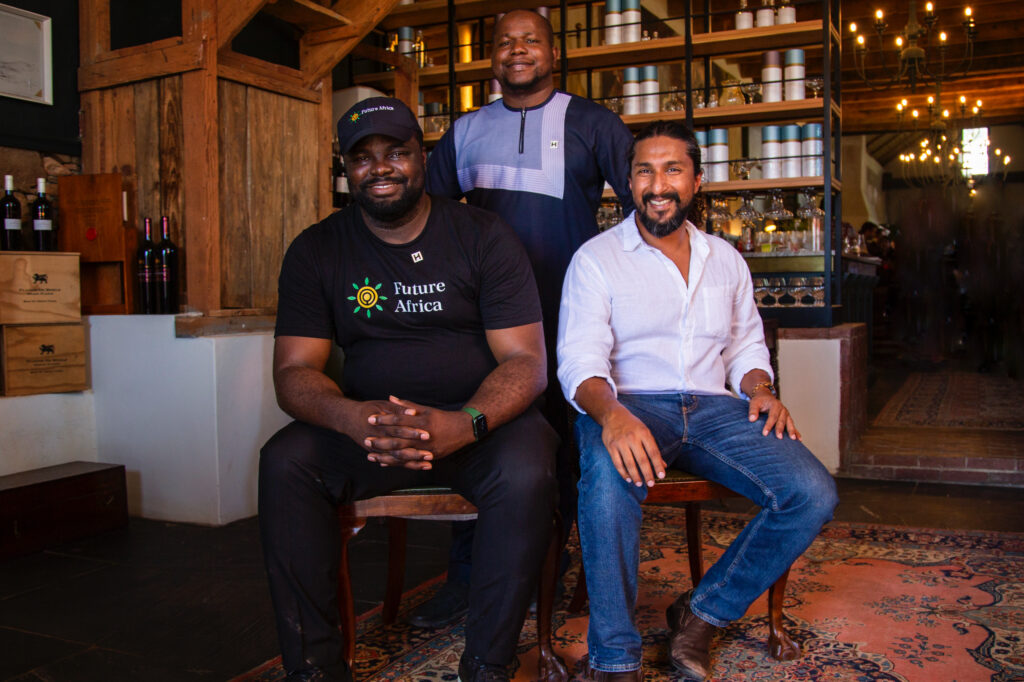
- Idris Bello H’11, Founding Partner at LoftyInc Capital, has become a cornerstone of early-stage investing in West Africa, with a portfolio spanning fintech, healthtech, and logistics.
- Amaka Okechukwu H’12, Founding Partner at Weav Capital, is charting a path in growth-stage investments with a focus on scaling African ventures that already have product-market fit.
- Naadiya Moosajee H’15 and Hema Vallabh H’22, Founding Partners at five35.ventures, are backing diverse, women-led, and impact-driven startups at the earliest stages of company formation.
- Maya Horgan-Famodu H’17, Founding Partner at Ingressive Capital, runs one of the continent’s most active seed funds, with deep roots in Nigeria’s rapidly scaling startup scene.
- Mike Mompi H’20, Founding Partner at Enza Capital, brings a data-driven approach to investing, emphasizing founder support, governance, and long-term sustainability.
- Thandeka Xaba H’20, Founding Partner at Digital Africa Ventures, is expanding access to capital for women-led and underrepresented startups in Southern Africa.
- Julia Price H’24, Founding Partner at Linea Capital, is pioneering revenue‑based financing , championing founder-friendly, non‑dilutive models.
Together, this constellation of venture leaders is extending the Harambean thesis beyond individual success. They are shaping regulatory conversations, launching co-investment platforms, tapping into diaspora wealth, and mentoring the next wave of African founders. If Silicon Valley’s early investors designed institutions that lasted, Africa’s Harambeans are now doing the same,across borders, sectors, and generations.
A Founder-Led Flywheel, Writing New Rules
Western observers often describe Africa’s tech ecosystem as nascent. But the more accurate story is of a founder-led flywheel taking shape, self-sustaining, self-correcting, and increasingly self-funded.
Lubega put it plainly in a TechCrunch interview: “We want to be the kind of investors we needed when we were raising.” It’s a sentiment that echoes Andreessen Horowitz’s founding ethos, only this time, it’s unfolding in Lagos and Nairobi, not Menlo Park.
If The Power Law chronicled how early movers shaped the U.S. economy by backing the next wave, Africa’s story is still being written. Harambeans, many of whom built the continent’s first category-defining startups, are now building the platforms and playbooks for what comes next.
They’re not just funding companies. They’re creating the conditions for an entire startup economy to thrive, with the long view firmly in mind.